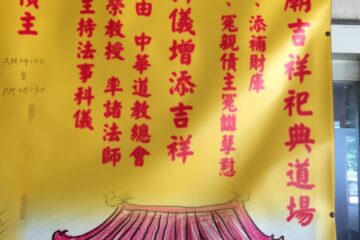
GENERATION OF A NEW SPACE: A maiden temple in the Chinese religious culture of Taiwan

Excluded from the ancestral lineages that give the Chinese dead a home, women who die unmarried are believed to become restless, polluting ghosts who bring misfortune on their families. At the Sam-giap maiden-temple in northern Taiwan, such spirits are instead ‘adopted’: their incense-ash is carried in red sachets and, once a year, mixed into the temple goddess’s own burner. Drawing on fieldwork begun in 1995, this article shows how the ritual substitutes community for kinship and equality for hierarchy, generating a space in which maiden-spirits are neither ghosts nor ancestors but ‘the disciples of the maiden-goddess’.

Read more
THE FORMATION AND FUNCTION OF THE CATEGORY “RELIGION” IN ANTHROPOLOGICAL STUDIES OF TAIWAN

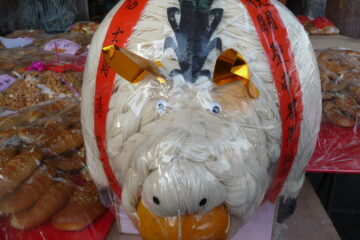
For decades, anthropologists treated Taiwan as a stand-in for a greater China, and its religious practices as the key to an underlying Chinese essence. This paper traces how the category “religion” came to do that work—signifying the pre-modern, dividing a dynamic West from a static Orient—and how it broke down under the twin critiques of orientalism and of culture as a bounded unit of analysis. It argues that the strength of contemporary approaches lies in treating religion not as a code to be deciphered but as an occasion for place-making and representational practice. A closing interview with Stephan Feuchtwang reflects on over thirty years of writing on religion in China and Taiwan.

Read more